Securitization models your expert can testify to.
Each deal is encoded from its own prospectus, proven against the trustee's own reported distributions, and cited to the governing clause. For the expert teams working securitization disputes.
The showcase deal is open. No account needed to run it.
Built on the public record and on tools you already run

Five layers, one engine
Built up from the filings
Every filing, byte for byte
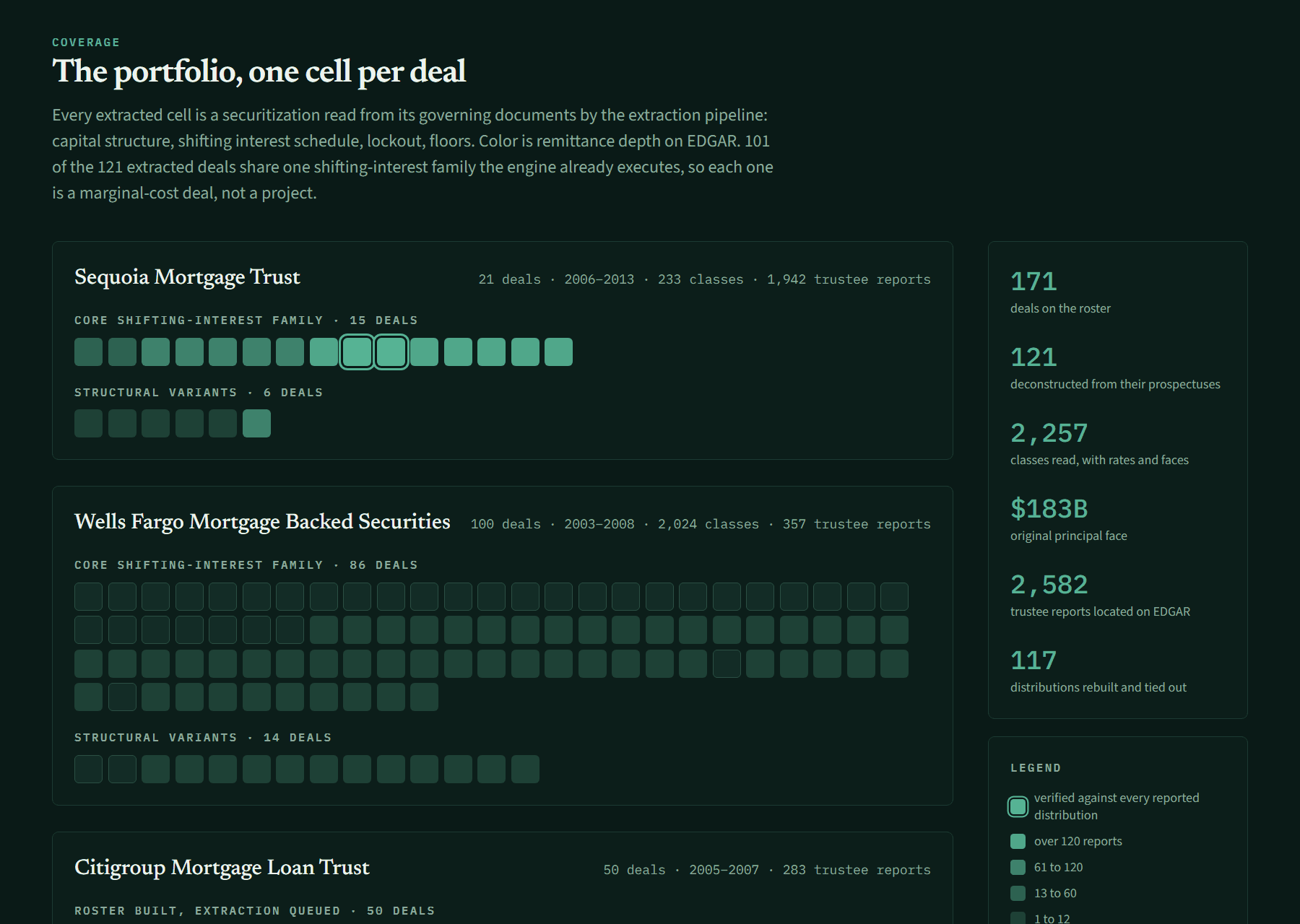
The prospectuses and 2,582 trustee reports behind 171 deals, pulled from EDGAR, stored as filed and hashed into an append-only ledger. Custody runs back to the SEC, not to us.
See the portfolio ›The waterfall, read from its own prospectus
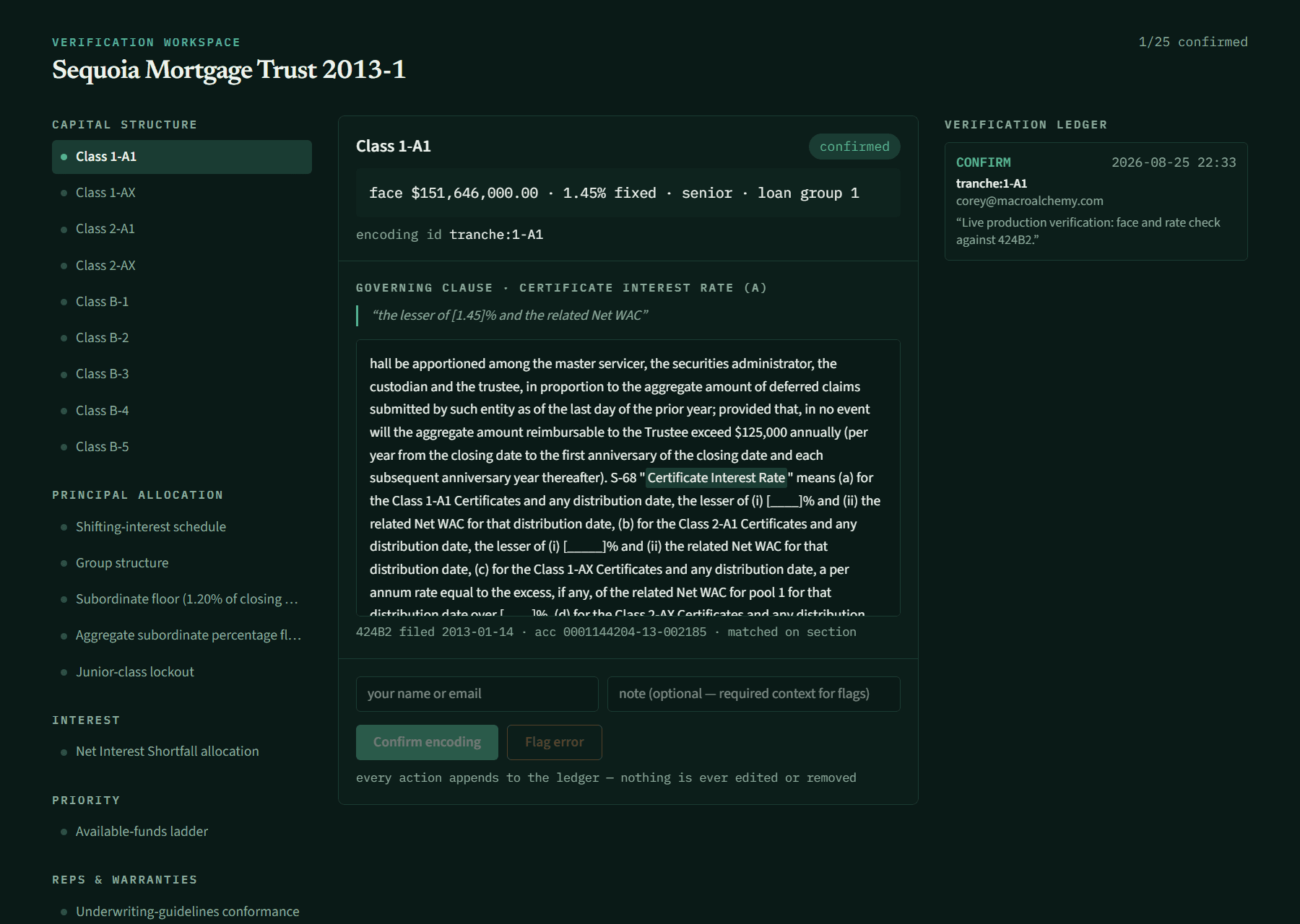
Each deal's rules are extracted into a provenance-linked encoding: prepayment percentages, lockout tests, loss allocation, every one cited to the page and clause that defines it.
Open a deal ›Replayed against everything the trustee reported
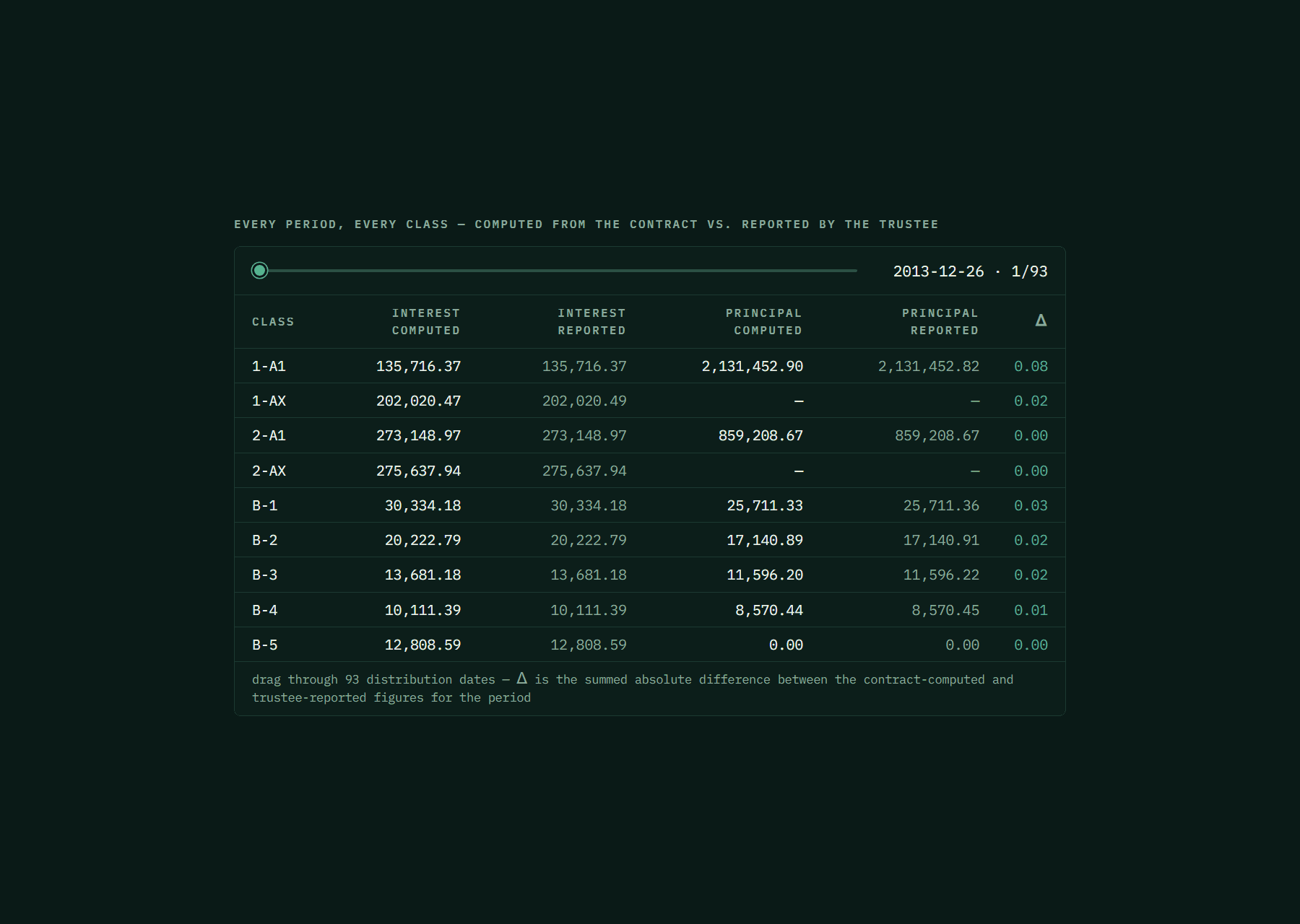
The encoding runs every historical distribution date and is compared with the remittance reports, class by class. For SEMT 2013-1: 93 of 93 periods, 99.7% within a dollar.
Read the tie-out ›Confirmed clause by clause, by your experts
Encoding beside source text. Confirm it or flag it. A correction is a new row with a name on it, never an edit. That is a record an expert can stand behind in a deposition.
Open the verification workspace ›Simulation and export on the verified engine
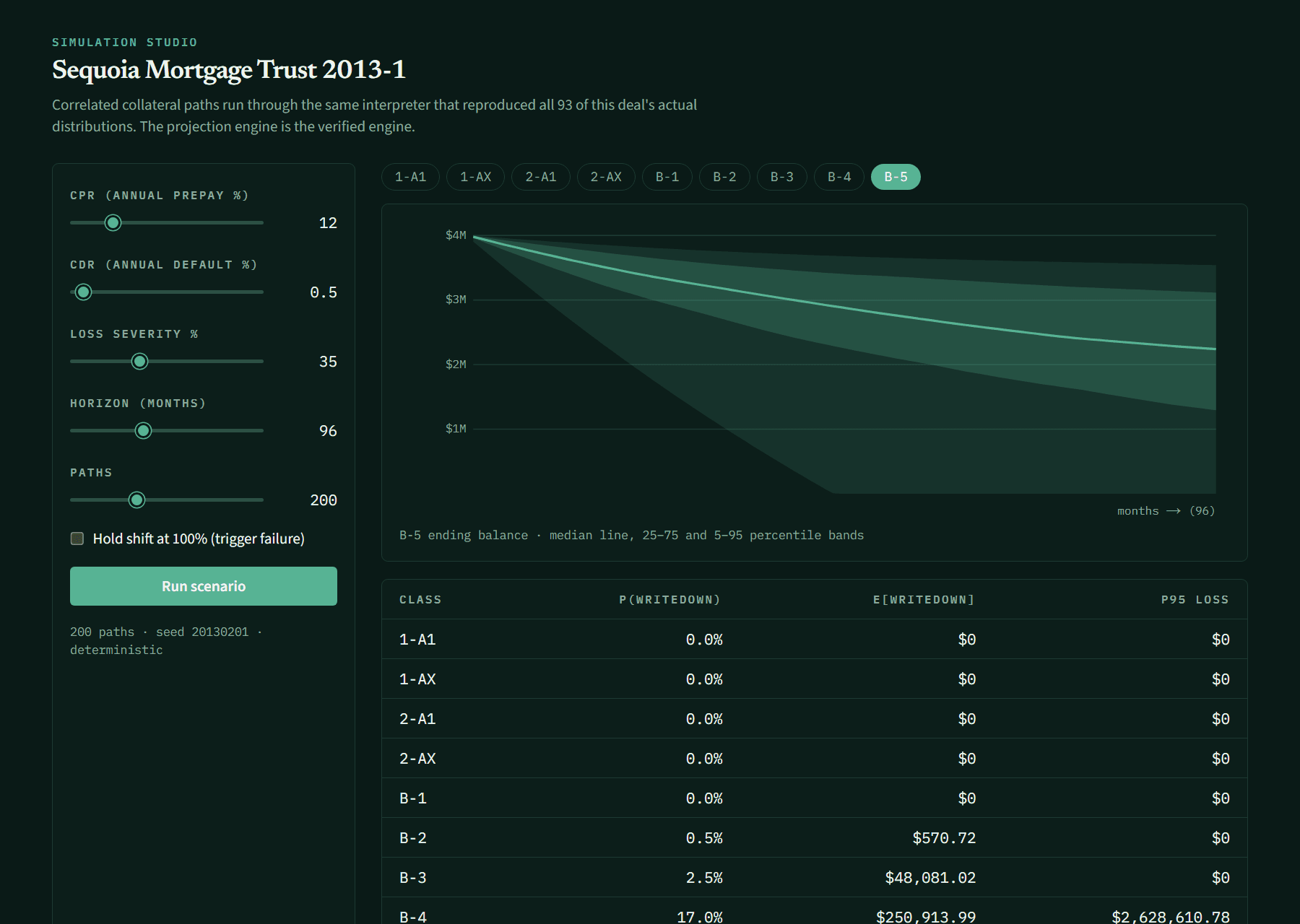
Correlated scenarios run through the same interpreter that reproduced the past. Then take it home: Python or R, the data, and a manifest with a hash on every source.
Try the simulation studio ›
Backtested against everything the trustee ever reported
Every period, every class: interest and principal computed from the contract, side by side with the remittance reports. An engine that cannot reproduce the past has no business predicting the future.
Read the tie-out ›Your experts verify it, clause by clause
Each encoding sits beside the source text that defines it. Confirm it or flag it. The ledger is append-only: a correction is a new row with a name on it, forever. That is what an expert can stand behind in a deposition.
Open the verification workspace ›Then ask the same engine what happens next
Correlated collateral paths run through the interpreter that reproduced every actual distribution. Drag prepayment, default and severity, and read the writedown probability for every class. The projection engine is the verified engine.
The studio replays the reported history too, distribution by distribution, so you can watch where every dollar the trustee paid actually went before asking where the next one goes.
Try the simulation studio ›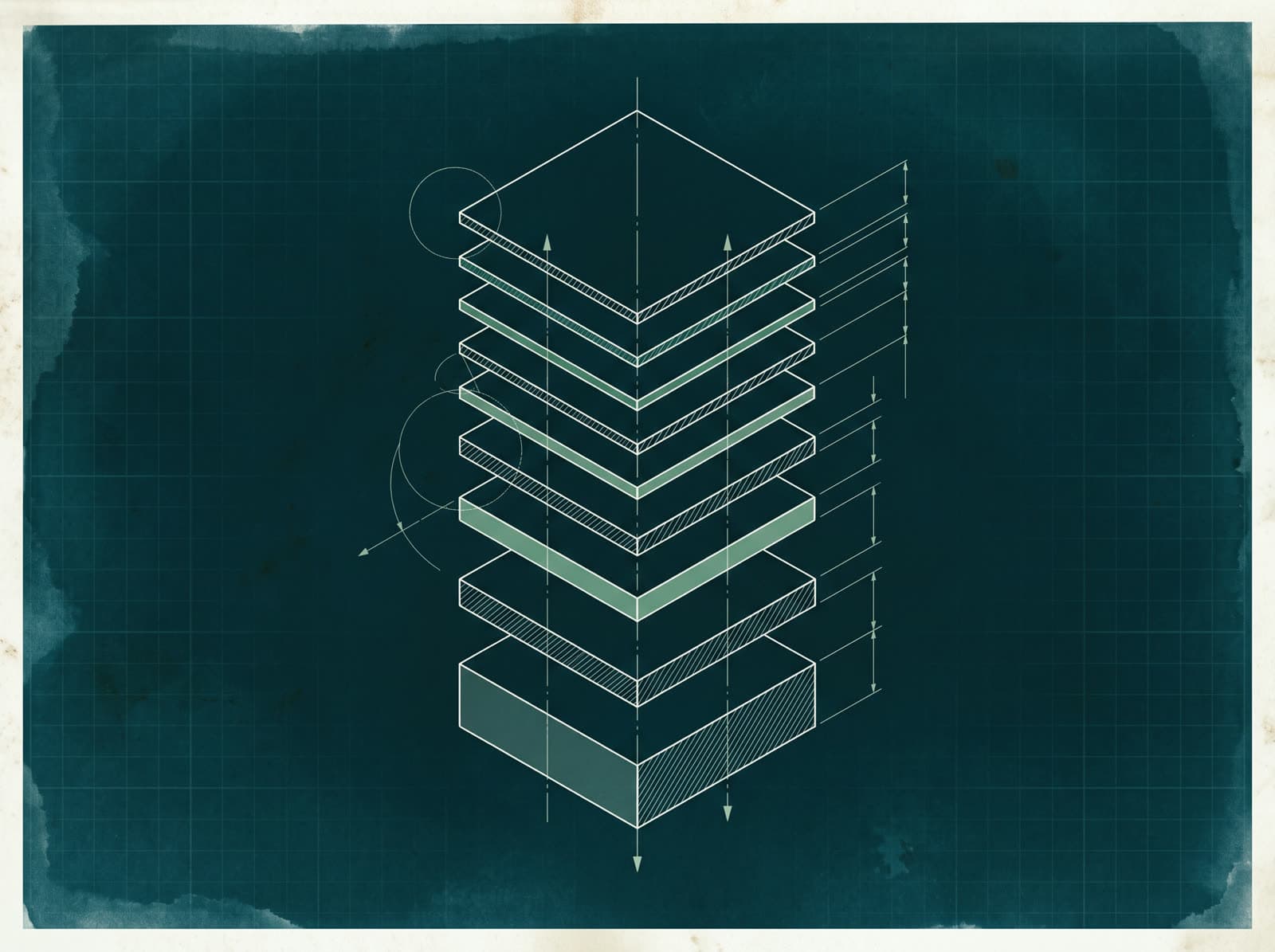
Take the model home
The case stack is readable code, sourced data, and a manifest of hashes. It runs on stock Python, on your own machine.
# Senior Prepayment Percentage (S-72):
# "for any distribution date occurring
#  before February 2018, 100%"
prepay_pct = min(1.0, pct + shift * sub_pct)

# Subordinate lockout (S-76/77): a class
# at or below 1.20% of closing balance
# stops receiving principal. B-5 fails
# this test on day one.
if cum_junior <= floor_amt:
    locked.add(cls)
Not just backtests
Coverage
Your matter is not about SEMT 2013-1
It is about a trust with its own prospectus, its own shifting-interest schedule and its own lockout. Search EDGAR by trust name, CIK or filing URL: the library tells you whether it already holds that deal, what the trustee actually filed, and whether the remittance history runs deep enough to tie out. If it is not there, queue it.
105 of the 140 deals already deconstructed share one shifting-interest family the engine executes today. For those, your deal is a marginal-cost encoding, not a project.
171
deals on the roster, across three sponsor shelves
140
deconstructed from their own prospectuses
2,771
classes read, with rates, faces and lockouts
$200B
original principal face
2,582
trustee reports located and mirrored
3
tied out to every distribution ever reported
Tied out means every distribution the trustee ever reported, rebuilt from the contract and matched class by class to within a dollar. 3 deals carry that ring today; 137 more are read from their prospectuses and awaiting it; 31 have their rosters built and extraction queued. We would rather show you the count than round it up.
- Sequoia Mortgage Trust
- 21 deals · 2006–2013 · 1,942 trustee reports
- Wells Fargo Mortgage Backed Securities
- 100 deals · 2003–2008 · 357 trustee reports
- Citigroup Mortgage Loan Trust
- 50 deals · 2005–2007 · 283 trustee reports
Custom tie-outs
Not every deal is on EDGAR
A private placement. A 144A trust. A history the trustee restated. Documents that exist only because you asked for them in discovery. Upload the prospectus and the remittance statements into a private matter and we do the encoding — your deal, deconstructed clause by clause and tied out against the distributions in your own documents.
What comes back is a private deal that behaves like every other one here: the tie-out, the verification workspace where your experts confirm each clause, and the case stack. Ten business days from acceptance.
Or you get the finding — which is the same promise
A tie-out is not a promise that a deal will model. That depends on documents you may not have. It is a promise the deal is worked and answered. Where the documents cannot support an encoding you receive a written finding — what was received, what parsed, what the encoding needed and what would unblock it — billed at the blocked rate and citable on its own. It is the work an expert would bill three weeks to reach.
Per deal
list / subscriber
- Standard
- $3,500 / $2,500
- Extended
- $7,500 / $6,000
- Blocked
- $950
The documents parse with the shipped parsers: encode, tie out, publish the private deal.
Work past the shipped pipeline — a statement format we do not parse yet, a structure the encoder does not cover, a restated history to reconcile.
The documents cannot support an encoding. You receive the finding, and are billed at this tier only.
Included in a subscription
- Practice — one on signing
- A custom tie-out redeemable in your first 90 days, so the question of whether this works on your deals is answered during onboarding. Every deal after it is at the subscriber rate.
- Firm — one in flight, always
- One tie-out in progress at any moment. When it is delivered, start the next. Nothing to bank, nothing to lose at a month end.
- Encrypted under your matter's own keyOne AES-256 key per matter. The ciphertext is bound to its own storage slot, so a file copied anywhere else does not open.
- Never reaches the public libraryThree separate mechanisms keep matter documents out of the shared store and the public ledger, each with its own test.
- No loan-level data, by constructionEvery upload is screened before it is stored. A borrower identifier or a loan tape is rejected, and nothing but the hash and the reason is kept.
- Destroyed on your word, certifiedDeletion returns a signed certificate listing every document by hash, so what was destroyed is provable afterwards.
One subscription. No per-matter licensing.
Expert teams rebuild these models by hand, matter by matter, then throw them away when the case ends. A Practice subscription costs less than one analyst-week of that transcription, and the verification history stays with you.
Waterfall Forensics
Practice · 10 seats
- Every verified deal
- included
- Unlimited exports
- included
- Matter workspaces
- included
Rebuilt in-house
One matter
- Analyst-week per deal
- ~$20,000
- Per-matter model license
- $25k–$100k
- Verification history
- discarded
Works for litigation teams, buy-side desks and universities
Every tier is an obvious yes against one analyst-week of internal rebuild, and cheap enough that a practice lead can approve it without procurement. Prices shown per month on annual billing.
Analyst
$299
/month, billed annually
For solo experts, academics and small shops
Create an account- 1 seatone named expert
- Full deal libraryevery verified encoding
- Verification accessconfirm and flag, on the ledger
- 2 case-stack exports a monthPython, data, manifest
Practice
Most popular$1,250
/month, billed annually
For a practice group
Create an account- 10 seatsthe whole practice
- Unlimited exportsevery matter, every deal
- Private matter workspacesconfidential by construction
- Simulation studioMonte Carlo on the verified engine
- One custom tie-out on signingyour own deal, worked in the first 90 days
Firm
$3,500
/month, billed annually
Firm-wide
Create an account- Unlimited seats
- API accessthe engine behind your own tools
- Priority deal onboardingthe deals your new matter needs, fast
- One custom tie-out in flightalways one in progress; finish it, start the next
- White-label exports
Academic
Free
or nominal, for universities
Seeds the next generation of experts
Create an account- Full deal library
- Verification access
- No matter workspaces
Built for the people who have to swear to it.
Subscribe to the library instead of rebuilding it. Verify once, cite forever.
The showcase deal is open. No account needed to run it.